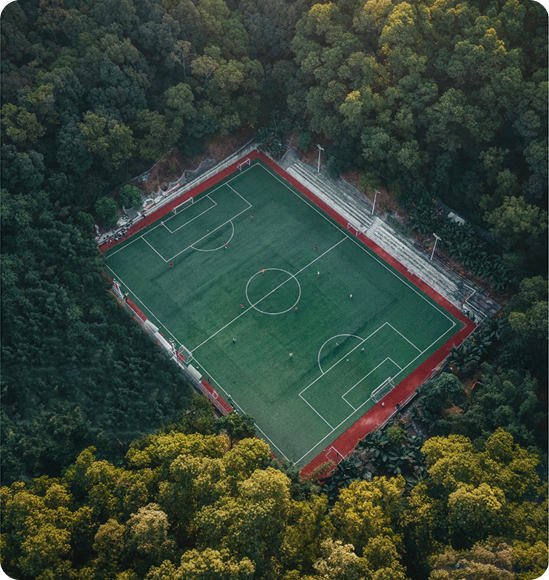
Synthetic Turf: Durability, Versatility, and High-Intensity Use
Synthetic turf is now widely used in sports facilities, whether for football, rugby, tennis, or other disciplines. It offers a durable, cost-effective, and year-round solution, even in challenging weather conditions. Designed to meet the demands of modern sports practice, it is perfectly suited for municipalities, sports clubs, schools, and multipurpose complexes.
Why Choose Synthetic Turf?
Synthetic turf stands out for its exceptional resistance to wear and consistent surface quality, making it a reliable and high-performing option for heavily used sports facilities.
It ensures consistent ball roll, stable and secure footing, and reduces the risk of injury for users.
Unlike natural grass, it remains playable year-round, regardless of weather conditions (rain, snow, frost), with no interruptions to activity.
With a high usage capacity, up to 60 hours per week, it is the ideal solution for clubs, municipalities, and sports venues exposed to heavy foot traffic. In comparison, a natural grass pitch typically allows for no more than 12 hours of weekly use.
Significant Maintenance Savings
Synthetic turf requires: No mowing | No fertilizing | No diseases | No watering | No field marking
This results in more than 50% savings in maintenance costs compared to natural grass, while also reducing the labor required.
Synthetic pitches offer an average lifespan of over 10 years if properly maintained.
They are engineered to withstand wear, UV exposure, impact, and harsh outdoor conditions, while maintaining their original performance level over time.